
The intricate world of gemology relies upon the harmonized interaction of light, material, and craftsmanship to produce the visual phenomenon known as the diamond. Central to this assessment is the standardized grading of the Four Cs—Cut, Color, Clarity, and Carat weight—yet the ultimate beauty of a finished piece of jewelry is often determined by factors that extend beyond the laboratory certificate. For professional jewelers and discerning consumers alike, the strategic selection of a diamond’s color grade must be inextricably linked to the technical precision of its cut and the specific reflective properties of the precious metal in which it is set. This analysis provides a comprehensive examination of how to navigate the choice between Colorless (D-F) and Near-Colorless (G-J) diamonds, with a specialized focus on the foundational role of Cut quality and the optical impact of Platinum, White Gold, and Yellow Gold settings.
The comprehensive guide to diamond cut
While color is often the first characteristic noticed by a layman, the diamond industry recognizes Cut as the most critical of the Four Cs because it dictates the stone’s ability to interact with light. A diamond’s cut does not refer to its outline or shape (such as round, oval, or pear), but rather to the mathematical precision of its proportions, symmetry, and polish. It is the “engine” of the diamond; even a stone with the highest possible color and clarity grades will appear dull and lifeless if it is poorly cut.
The mechanics of light performance: Brilliance, fire, and scintillation
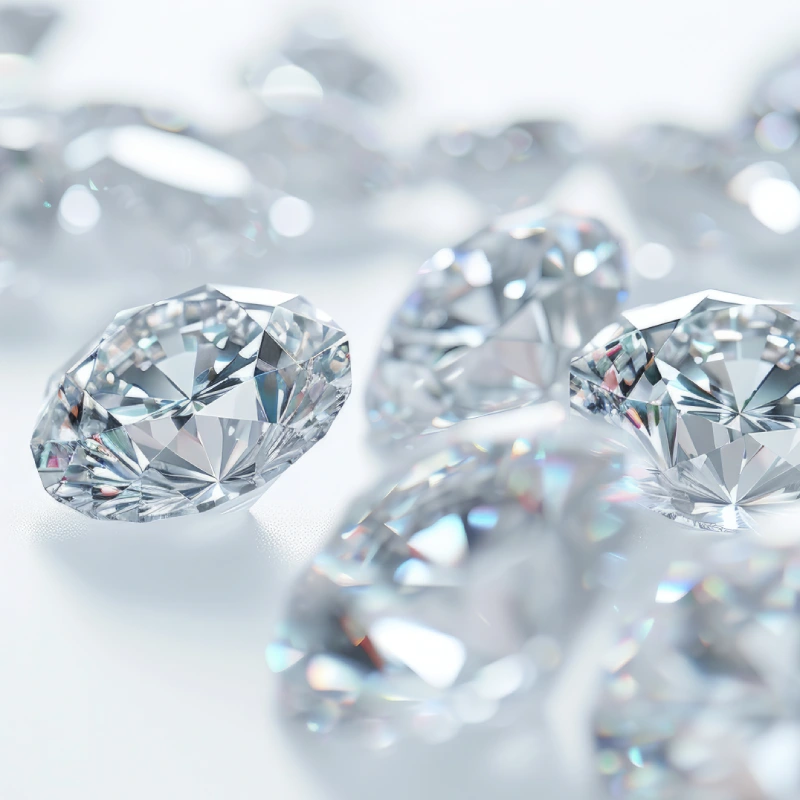
A masterfully cut diamond manipulates light through three primary optical effects: brilliance, fire, and scintillation. Brilliance refers to the total amount of white light reflected from the internal and external surfaces of the facets. Fire, or dispersion, occurs when white light is broken down into its spectral rainbow colors as it exits the crown. Scintillation describes the flashes of light and the pattern of dark and light areas visible when the diamond, the light source, or the observer moves.
The technical execution of these effects depends on the path light takes through the stone. In an ideally cut diamond, light enters through the table, reflects off the pavilion facets, and returns to the observer’s eye through the crown. If a diamond is cut too shallow, light strikes the pavilion at a low angle and leaks out of the bottom. If cut too deep, light reflects off the first pavilion facet but strikes the second at an angle that causes it to refract through the side rather than returning upward.
The role of proportions in color masking
Crucially, the quality of the cut directly influences the perception of body color. Intense light return and sparkle can “mask” or hide the subtle yellow tints found in Near-Colorless (G-J) diamonds. When a diamond possesses a high degree of brilliance and scintillation, the eye is distracted by the constant activity of light, making it far less sensitive to body color. This is why a well-cut “J” color diamond can often face up whiter than a poorly cut “H” color diamond.
| Proportion Component | Ideal Range (Round Brilliant) | Gemological Impact |
| Total Depth % | $59.0\% – 62.5\%$ | Balances brilliance and face-up size; excessive depth hides weight. |
| Table % | $54\% – 57\%$ | Controls the primary entry point for light; affects fire/brilliance balance. |
| Crown Angle | $34.0^{\circ} – 35.0^{\circ}$ | Determines fire; shallow angles sacrifice fire for brilliance. |
| Pavilion Angle | $40.6^{\circ} – 41.0^{\circ}$ | The “anchor” of light performance; deviations cause light leakage. |
| Girdle Thickness | Thin to Slightly Thick | Protects the stone from chipping without sacrificing light return. |
| Culet Size | None to Pointed | Prevents light from escaping through the bottom tip. |
Technical precision in manufacturing: CAD and finishing
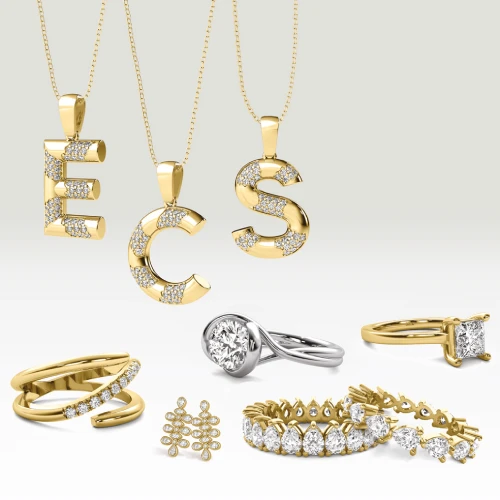
In modern manufacturing, achieving these ideal proportions requires a fusion of artisanal skill and advanced technology. Companies like Empire Casting House utilize a dedicated team of 20-30 CAD Designers to ensure that every facet is digitally perfected before a piece of jewelry is ever cast in metal. This digital modeling allows for the correction of symmetry and proportions with micron-level accuracy, which minimizes the margin of error in the final production phases. Furthermore, the finishing process—comprising tumbling, pre-polishing, and complete polishing—is essential to remove surface defects and maximize the stone’s radiance.
Deconstructing the GIA color scale
To choose effectively between D-F and G-J color grades, one must understand the chemical origins of diamond color. Most gem-quality diamonds categorized in the D-to-Z range are not truly “colored” but rather possess varying degrees of a yellow or brown tint. This tint is primarily caused by the presence of nitrogen atoms within the diamond’s carbon crystal lattice. Nitrogen absorbs blue light, causing the stone to transmit the remainder of the spectrum, which the human eye perceives as yellow.
The colorless range (D, E, F): The pinnacle of purity
Diamonds in the Colorless category are the rarest and most chemically pure. Grade D represents the absolute highest standard, devoid of any perceptible hue even under 10x magnification by a trained grader. Grades E and F are virtually identical to D to the naked eye; the minute traces of color they contain are generally only detectable by comparing them face-down against a set of “master stones” in controlled laboratory conditions.
The primary appeal of the D-F range is its “icy” transparency. These stones have an exceptional ability to reflect all wavelengths of light equally, resulting in a crisp, cool radiance that is highly prized for engagement rings and high-end investment pieces.
The near-colorless range (G, H, I, J)
The Near-Colorless category is the most popular range for engagement rings because it offers a practical balance between aesthetic appeal and affordability.
- G and H Grades: These stones still appear “white” or colorless to the vast majority of observers. When set in a ring and viewed from the top, they are virtually indistinguishable from diamonds in the D-F range.
- I and J Grades: These stones possess a subtle “warmth” or beige tint that may be detectable when placed next to a higher-grade stone or viewed from the side. However, a well-cut I or J diamond will still face up white in most lighting environments.
| Color Grade Category | Percentage of Population with Detectable Tint (Face-Up) | Price Impact vs. D Color |
| Colorless (D-F) | Nearly $0\%$ | Baseline to $-25\%$ |
| G – H | $< 5\%$ | $-30\%$ to $-40\%$ |
| I – J | $10\% – 20\%$ | $-50\%$ to $-60\%$ |
| K – M | $> 50\%$ | $-70\%+$ |
The synergy of metal and stone
Diamonds are highly reflective; their facets act as tiny mirrors that absorb and return the colors of their immediate surroundings. Consequently, the metal of the ring setting is not just a structural element but a primary factor in the stone’s final visual appearance.
Platinum and white gold: The neutral contrast strategy
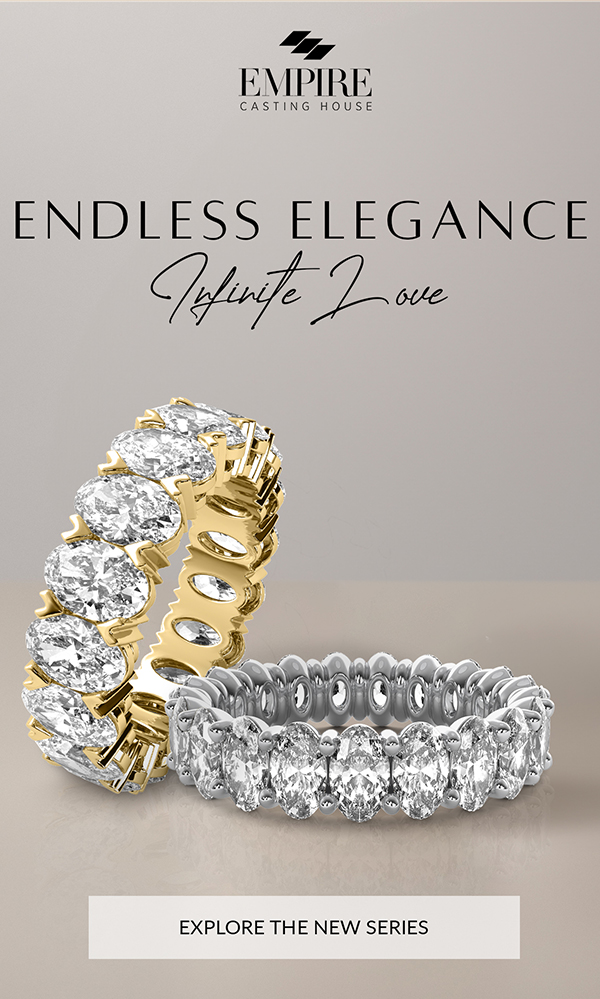
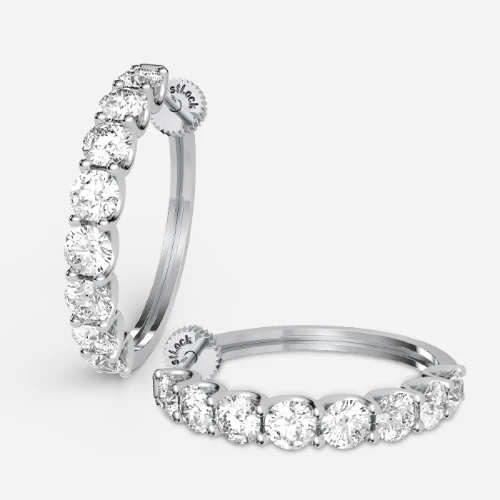
Cool-toned metals like Platinum and White Gold are the ideal pairing for D-F and G-H diamonds. These metals create a seamless, neutral backdrop that emphasizes the stone’s lack of color.
- Platinum’s Optical Role: Platinum is naturally white and maintains its lustrous sheen permanently. Its high purity ensures that no yellow tones are reflected into the diamond, allowing the “ice” effect of D-F stones to reach its maximum potential.
- White Gold’s Reflectivity: White gold is usually plated with rhodium to achieve an ultra-white, reflective surface. This mirror-like finish can actually enhance a diamond’s perceived brightness, making a G-H diamond appear even whiter. However, if the rhodium wears off, the underlying warm alloy can start to influence the stone’s appearance, requiring regular maintenance to preserve the cool aesthetic.
The risk with white metals is that they are “unforgiving” of diamonds with a visible tint. If a J color diamond is set in an ultra-white platinum band, the contrast will highlight the warmth in the stone, potentially making it look more yellow than it would if it were viewed unmounted.
Yellow gold: The harmonious masking strategy
Yellow gold settings are fundamentally different in their interaction with diamond color. Instead of creating contrast, yellow gold creates harmony.
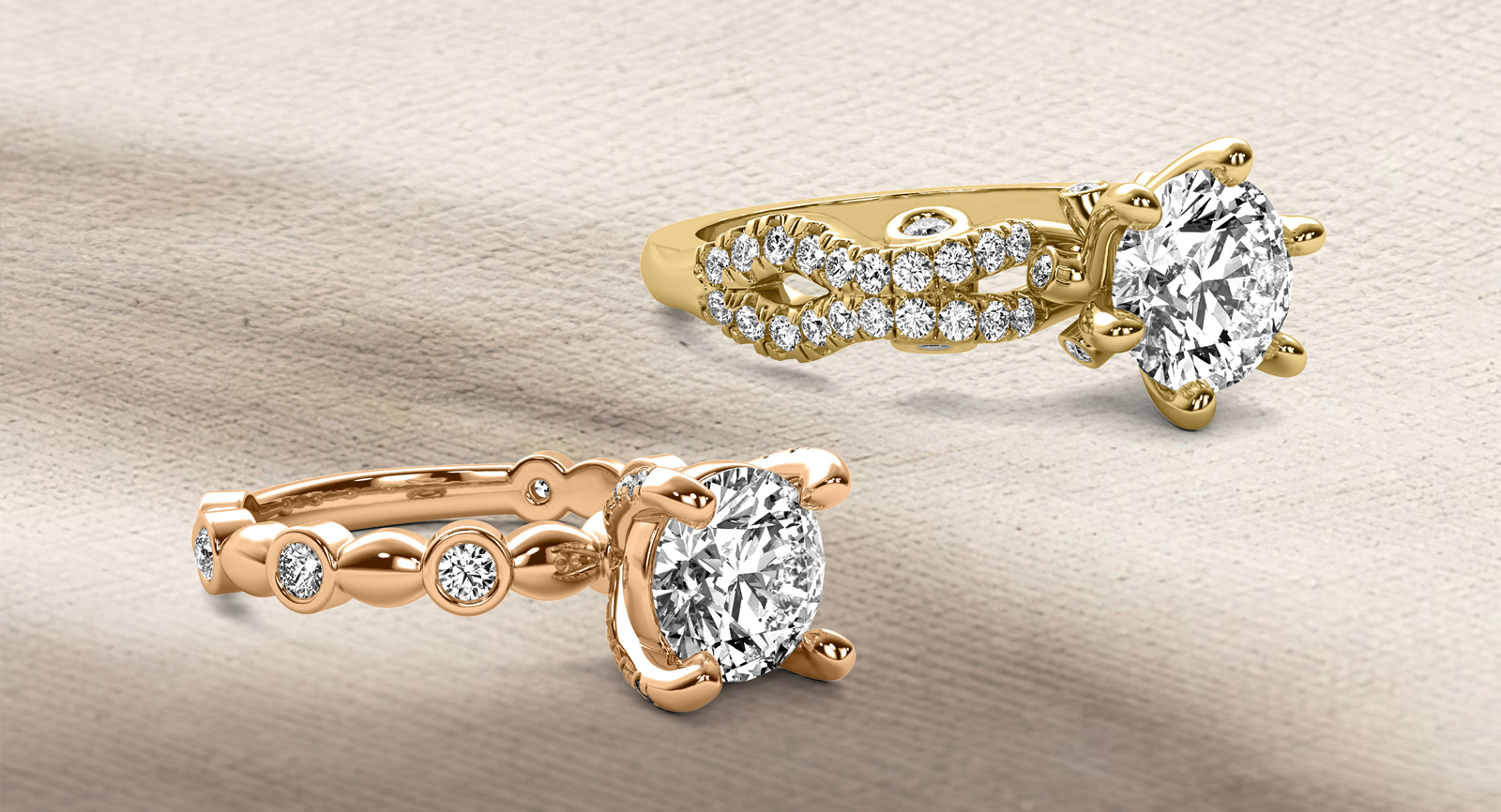
- Reflective Absorption: In a yellow gold setting, the diamond reflects the metal’s warm hue. For a Near-Colorless diamond (I-J) or a Faint color diamond (K-M), this is a significant benefit; the eye perceives the slight warmth in the stone as a reflection of the gold setting rather than a characteristic of the diamond itself.
- The Devaluation of Purity: Conversely, setting a D-F diamond in yellow gold is often viewed as a strategic error. The expensive colorlessness of the D-F stone is obscured by the setting’s reflection, essentially making a D color stone appear like a G or H color. For professional jewelers, the recommendation is often to save money on the color grade if the customer is set on a yellow gold band.
Practical guidelines for choosing between D-F and G-J
The optimal color grade is rarely the most expensive one; it is the one that achieves the desired visual outcome within the specific constraints of the project.
The “white face-up” rule
Professional buyers always evaluate how a stone “faces up”. Because diamonds are set in rings table-up, the side view—which is where graders spot color most easily—is largely hidden by the metal basket. If a stone is well-cut and has a “white face-up,” a lower grade can be used with confidence.
Managing carat weight and color visibility
The relationship between size and color is a crucial second-order insight. As a diamond’s physical volume increases, its ability to trap and concentrate body color grows.
- Under 1 Carat: Color perception is minimal; G-J diamonds appear almost identical to D-F.
- Over 1.5 Carats: The concentration of nitrogen tint becomes more apparent. For these larger stones, staying at “H” or higher is recommended for white metals.
- Over 2.5 Carats: Rarity premiums escalate, and color concentration is high. Investment-grade buyers typically look at F color or better to ensure no detectable warmth.
| Carat Weight | Recommended Color (Platinum/White Gold) | Recommended Color (Yellow/Rose Gold) |
| $< 0.50$ ct | I – J | J – K |
| $0.50 – 1.00$ ct | G – H | I – J |
| $1.01 – 2.00$ ct | F – G | H – I |
| $> 2.00$ ct | E – F | G – H |
The impact of shape on selection
Not all diamond shapes handle color equally. Brilliant cuts are superior for masking color, while step cuts and elongated shapes are more demanding.
- Round Brilliant: Hides color better than any other shape. An “H” or “I” color round diamond can look perfectly white in a white gold setting.
- Emerald and Asscher (Step Cuts): These shapes feature large, flat facets that do not break up light as vigorously as brilliant cuts. They reveal the stone’s true body color and clarity characteristics. It is strictly recommended to stay at “G” color or higher for step cuts to maintain a colorless look.
- Oval, Pear, and Marquise: These shapes tend to concentrate color near their narrow points. This “pooling” effect can make a “G” color pear-shaped diamond look more tinted at the tip than a “G” color round stone.
- Princess and Radiant: These hide color well but can concentrate warmth in the sharp corners.
Professional trade secrets
In the New York Diamond District, professional manufacturers like Empire Casting House utilize specific design strategies to optimize stone appearance regardless of the grade.
The two-tone “white head” technique
A common solution for customers who desire a yellow gold ring but want a bright center stone is the use of white gold or platinum prongs on a yellow gold shank.
- Mechanism: By mounting the stone in white metal prongs, the reflection immediately surrounding the diamond is cool and colorless. This “isolates” the stone from the yellow reflections of the band, allowing a D-F stone to maintain its iciness or a G-H stone to face up whiter.
- CAD Execution: Empire Casting House specializes in these hybrid settings, where the CAD designers ensure that the transition between the white metal head and yellow gold band is seamless and structurally robust.
Leveraging blue fluorescence
Fluorescence is a naturally occurring phenomenon where diamonds emit a blue glow under UV light.
- Color Correction: Since blue and yellow are complementary colors, blue fluorescence can neutralize the yellow tint in J-M color diamonds. In sunlight, a J-color diamond with strong blue fluorescence can appear as white as an H-color diamond.
- Cost Efficiency: Diamonds with fluorescence often trade at a discount, offering savvy buyers a way to get a “whiter-facing” stone for a lower price.
- Risk Factors: However, in D-F diamonds, strong fluorescence is generally avoided, as it can cause a “milky” or “hazy” appearance that reduces transparency.
The halo effect: Strategic contrast
Halo settings, which surround a center diamond with smaller “melee” stones, can dramatically alter color perception.
- Enhancing the Center: If a center stone (e.g., J color) is surrounded by a halo of slightly more tinted stones (e.g., L color), the center diamond will look whiter by contrast.
- The “Shadow” Risk: Conversely, if a Near-Colorless center stone is placed in a “super white” halo of D-F melee, the contrast will make the center stone look yellow and dull. Jewelers must match side stones within 1-2 color grades of the center stone to ensure a cohesive appearance.
Manufacturing excellence and ethical integrity
The foundation of high-quality jewelry production lies in a transparent and ethical supply chain. Based in the heart of New York City, Empire Casting House operates under a strict “start to finish” production model that prioritizes both craftsmanship and responsibility.
Industry affiliations and quality assurance
Empire Casting House maintains memberships with world-class organizations that set the standards for global trade.
- GIA (Gemological Institute of America): Adherence to GIA’s rigorous grading standards ensures that every diamond provided—whether natural or lab-grown—is accurately assessed and represented to the retailer.
- RAPNET (The Diamond Market): Membership in the world’s largest diamond trading network ensures access to ethically sourced stones from legal mines far from conflict zones.
- JBT (The Jewelers Board of Trade) & MJSA: These certifications reflect the company’s professional excellence and creditworthiness in the manufacturing sector.
- FAIRMINED Licensed Brand: This commitment to responsibly mined gold ensures that the settings provided are not only beautiful but socially and environmentally sensitive.
The manufacturing workflow
The wholesale process at Empire Casting House is designed to speed up business processes for jewelers while turning creative visions into reality.
- Idea Generation and CAD Design: Collaborating with clients to create a concrete 3D design concept.
- 3D Printing: Converting digital files into high-precision wax models using state-of-the-art printers.
- Casting: Utilizing lost-wax or centrifugal casting methods to transform molten gold or platinum into jewelry.
- Setting and Polishing: Specialized artisans position stones using techniques like pavé, bezel, or tension setting, followed by meticulous polishing to achieve a mirror finish.
- Quality Control: Detailed microscopic examination of stone placement, prong strength, and metal purity ensures that no piece leaves the factory with defects like pores or cracks.
Conclusion and actionable professional advice
Selecting the right diamond color grade is not about finding the most “perfect” stone on a certificate; it is about finding the stone that performs best in its intended environment. By understanding the profound impact of Cut quality and the reflective properties of precious metals, retailers can provide their customers with maximum beauty and value.
Summary of strategic recommendations
- Prioritize Cut Over Color: An Excellent or Ideal cut diamond will always appear more brilliant and whiter than its grade suggests.
- Match D-F with White Metals: Preserve the rarity of colorless diamonds by using Platinum or rhodium-plated White Gold.
- Utilize G-J for Budget Optimization: For Round Brilliant stones under 1.5 carats, Near-Colorless grades are indistinguishable from higher grades once mounted.
- Embrace Warmth for Yellow Gold: Use the money saved on lower color grades to upgrade the Cut or Carat size when setting stones in yellow gold.
- Consider Shape and Carat Complexity: Select higher grades for step cuts and large stones, and consider shape-masking properties for elongated cuts.
- Partner with Expert Manufacturers: Leverage the CAD precision and ethical sourcing standards of industry leaders like Empire Casting House to ensure the final product exceeds expectations.
Ultimately, the most successful jewelers are those who act as educators, guiding their clients through the nuances of light and metal to create a piece that is both technically excellent and emotionally resonant.