
If I had a dollar for every time someone walked into the New York Diamond District asking for the “biggest” diamond their budget could afford, I’d have enough to retire. It’s a natural instinct—we want size. But as someone who has spent over two decades at Empire Casting House watching rough concepts turn into finished masterpieces, I can tell you that “big” doesn’t always mean “bright.”
In the industry, we have a saying: Cut is King
While Carat, Color, and Clarity are determined by nature, Cut is the only “human factor” in the 4Cs. It is the difference between a diamond that looks like a piece of glass and one that seems to hold a fire of its own. If you’re a jeweler looking to provide the best value to your clients, or an individual designing a legacy piece, understanding the “make” of a stone is the most powerful tool in your belt.
The carat trap: Why weight can be deceptive?
Many people confuse “carat” with “size.” Carat is strictly a measurement of weight (200 milligrams per carat). Think of it like a person’s weight—two people can weigh exactly 200 pounds, but one might be tall and lean while the other is short and carries that weight in the middle.
Diamonds are the same. A poorly cut diamond is often what we call “steep-deep”. The cutter leaves extra weight in the “belly” or the pavilion of the stone to keep the carat weight high (and the price higher), but that weight is hidden from view once the stone is set.
A well-cut diamond, however, distributes that weight across the table (the top surface), giving you a larger “face-up” appearance. In fact, an expertly cut 0.90-carat diamond will often look larger and much more vibrant than a 1.00-carat stone that was cut poorly just to hit a weight milestone.
The physics of sparkle: Brilliance, fire, and scintillation
When we talk about a diamond “performing,” we’re looking for three specific things:
- Brilliance: This is the white light reflecting off the internal facets and back to your eye.
- Fire: The “rainbow” flashes you see. This happens when light is dispersed into the colors of the spectrum.
- Scintillation: The flashes of sparkle that occur when the diamond moves.
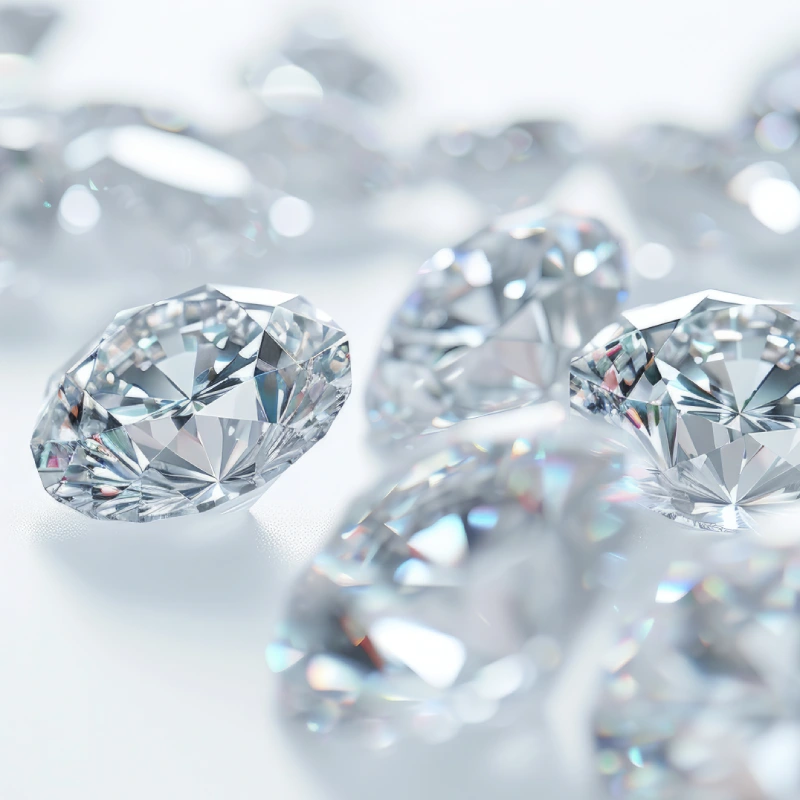
A diamond is essentially a series of tiny mirrors. In a stone with Ideal or Excellent proportions, light enters through the top, bounces off the pavilion mirrors, and is fired back out through the table to your eye. If the cut is too shallow, the light “leaks” out the bottom. If it’s too deep, it escapes through the sides. No light, no delight.
How cut cheats the other Cs?
One of the best-kept secrets in the trade is that a top-tier cut actually makes a diamond look better in categories where it might technically be graded lower.
- Whiter Color: Because an Excellent cut reflects more white light back to the viewer, it can actually mask the slight yellow tint in stones graded I, J, or K. An “Ideal” cut J-color stone can often face up whiter than a “Fair” cut G-color stone because the sheer volume of reflected light overwhelms the body color of the crystal.
- Cleaner Clarity: We call this “masking inclusions.” The intense scintillation and fire of a well-cut stone create so many flashes of light that small imperfections (inclusions) become nearly impossible to see with the naked eye. This is how we find “eye-clean” stones in the SI1 or SI2 range that look like a million bucks.
What to look for?
When you’re looking at a GIA or AGS report, don’t just look at the final grade. Look at the proportions. For a Round Brilliant, we generally look for these “sweet spot” numbers to guarantee a winner:
- Table Percentage: 53% to 58%.
- Total Depth: 59% to 62.5%.
- Crown Angle: 33.5° to 35.5°.
- Pavilion Angle: 40.6° to 41.0°.
Pro tip: In 2022, GIA acquired the light performance technology from AGS, so you’re seeing even more rigorous standards being applied across the board today.
Why the setting matters as much as the stone
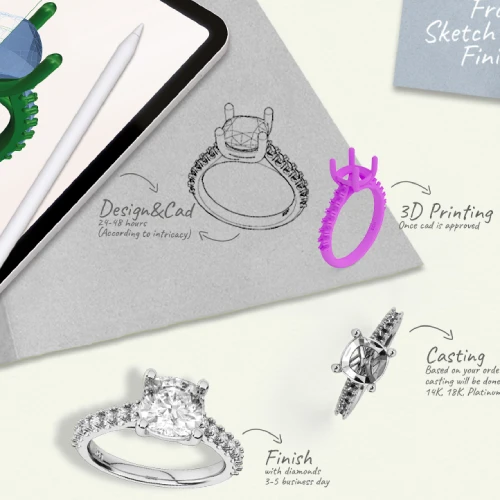
At Empire Casting House, we see the journey of a diamond from a loose stone to a finished engagement ring. You can buy the most perfectly cut diamond in the world, but if the CAD design doesn’t account for light flow—or if the prongs are too bulky and block the light—you’re dimming the “King’s” crown.
Our team in New York focuses on creating settings that stay out of the diamond’s way. We use high-precision 3D printing and master setting techniques to ensure that the light can enter and exit the stone exactly as the cutter intended.
If you are working with a strict budget, our advice remains the same as it has been for twenty years: Never compromise on Cut. Sacrifice a bit of clarity or a grade of color if you have to, but keep that cut grade at “Excellent” or “Ideal.”
A diamond’s job is to sparkle. Without a great cut, it’s just a rock. With it, it’s a masterpiece.
Ready to find the perfect stone for your next design?
Explore our ethically sourced diamond supply and custom manufacturing services at Empire Casting House. We’re here in the NYC Diamond District, ready to help you bring your vision to life with the precision it deserves.