
In the highly competitive world of fine jewelry, quality is not a subjective concept; it is a measurable, controllable, and strategic standard. While consumers often judge a piece solely by its aesthetic appeal, jewelry professionals understand that true quality lies beneath the polished surface—in the structural integrity of the metal, the security of the stone settings, and absolute dimensional accuracy. A single overlooked weak point, such as an unstable prong, a mismatched gemstone color, or microscopic casting porosity, can lead to catastrophic failures, high return rates, and irreparable reputational damage. Implementing a rigorous, multi-stage quality control (QC) workflow ensures that every finished piece matches the original creative intent while meeting strict technical and commercial standards.
Why quality control matters in jewelry production
For jewelry brands and manufacturers alike, quality control is not an optional final step; it is a fundamental pillar of operational success and market credibility. Understanding why quality control must be prioritized helps brands mitigate manufacturing risks and build long-term consumer trust.
Protecting brand reputation and consumer trust
Fine jewelry purchases are heavily driven by emotional investment and high expectations. When a customer purchases an engagement ring or a bespoke necklace, they assume the piece is built to last. If a diamond falls out due to poor setting or a clasp fails prematurely, the consumer directly connects the defect with the brand’s core value. Consistent quality control guarantees that every piece leaving the facility reinforces the brand’s promise of luxury and excellence.
Maintaining consistency across production runs
Whether a brand is executing a limited custom run or scaling production to thousands of units, visual and structural consistency is critical. Variations in gemstone calibration, uneven metal polishing, or inconsistent sizing can destroy the cohesion of an entire collection. A structured QC framework ensures that the final mass-produced pieces are identical replicas of the approved master prototype.
Minimizing costly returns and repairs
Catching a defect at the very end of the manufacturing pipeline—or worse, after the product reaches the client—is incredibly expensive. Redoing a piece that has already been polished and set wastes precious metal, labor hours, and transit time. By identifying flaws early in the production cycle, manufacturers can rectify issues immediately, avoiding shipping delays and reducing the financial burden of after-sales repairs and retail disputes.
Critical stages of the quality control workflow
An effective quality control system does not rely on a single check at the end of the line. Instead, it is integrated into every individual stage of jewelry fabrication, from the digital blueprint to the final steam cleaning.
Design and CAD validation
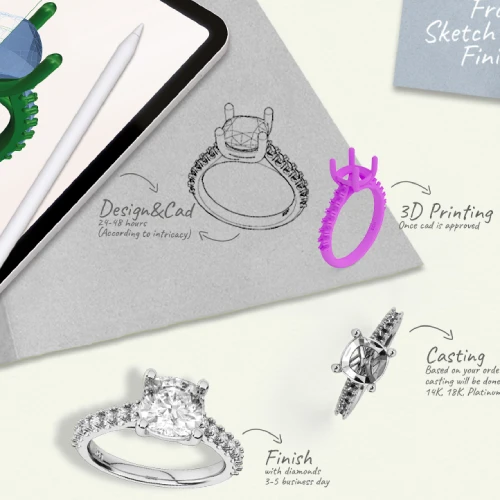
Quality control begins in the digital realm long before any metal is melted. During the Computer-Aided Design (CAD) stage, engineers analyze the 3D model to ensure it is structurally sound and production-ready. Technicians check for minimum wall thicknesses, proper weight distribution, and correct prong dimensions required for secure stone setting. Poorly designed CAD models lead to weak shanks, high casting failure rates, and unstable settings that cannot withstand daily wear.
Material and gemstone verification
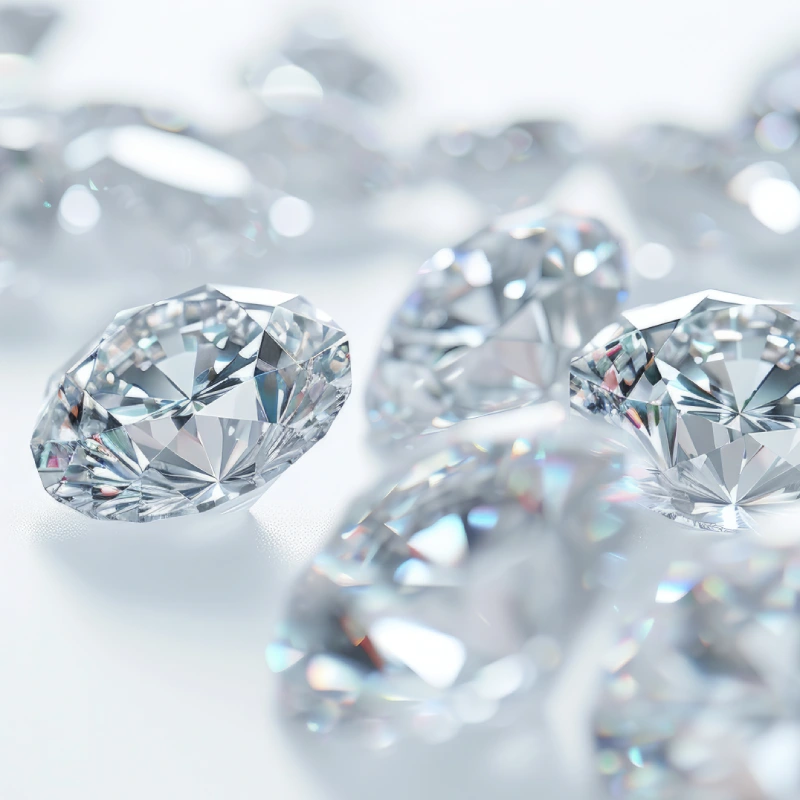
The foundation of any high-end jewelry piece lies in its raw materials. Metal quality control requires verifying the precise alloy composition and purity (such as 925 sterling silver or gold alloys) to meet legal hallmarking standards. Simultaneously, loose gemstones—whether natural or lab-grown diamonds—must undergo strict calibration checks. Inspectors examine stones under magnification for exact millimeter dimensions, color matching, and cut symmetry to ensure they fit perfectly into their designated settings without creating uneven pavé patterns.
Post-casting structural analysis
Casting is a highly sensitive thermal process where metal is injected into molds. Immediately after casting, the raw metal pieces must be thoroughly inspected for structural defects. The primary enemy at this stage is porosity—microscopic air bubbles or voids trapped inside the metal due to improper temperature settings or investing materials. Deep porosity weakens the jewelry structure and can cause cracking or surface pitting that cannot be polished out. Flawed castings must be rejected and remelted immediately rather than allowing them to progress down the line.
Stone setting and alignment checks
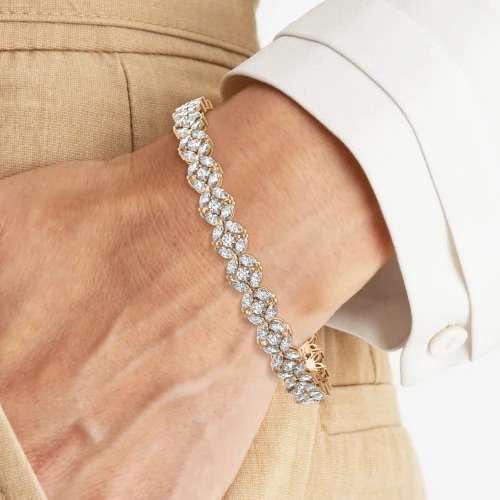
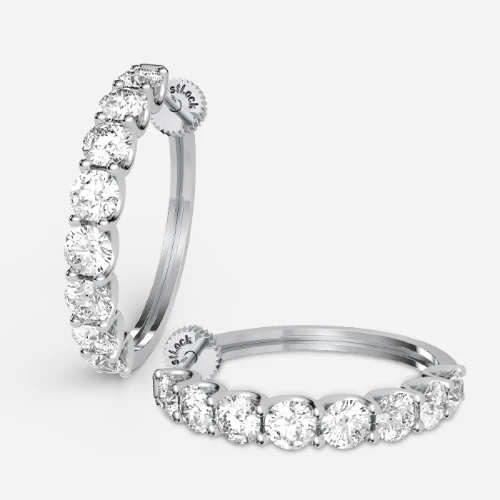
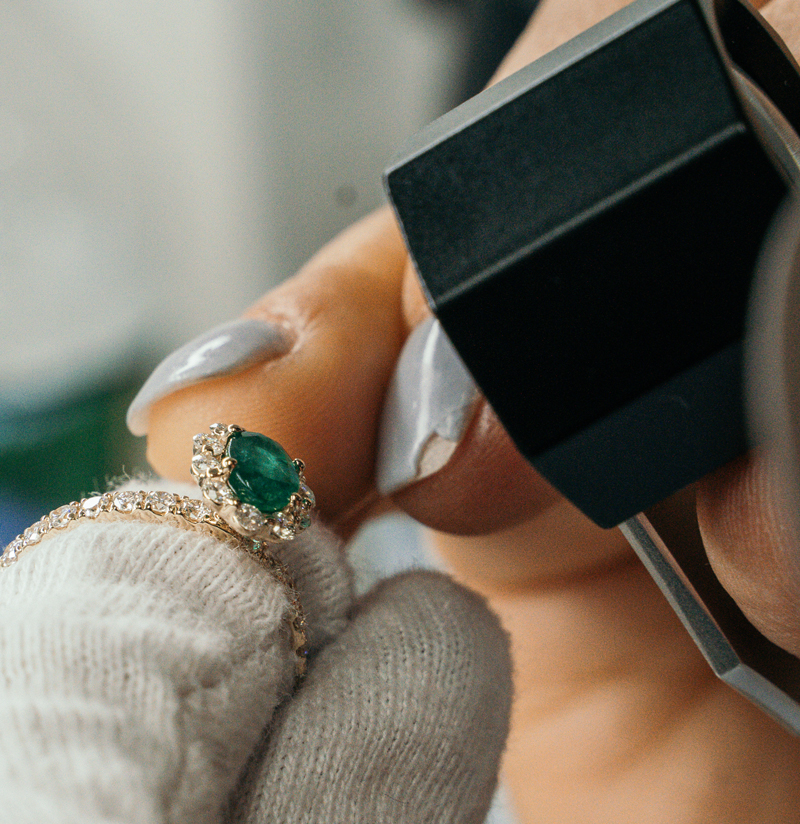
Stone setting requires exceptional craftsmanship and represents a major source of quality vulnerability. Bench jewelers use specialized magnification tools, like loupes or stereomicroscopes, to inspect every individual prong and bezel. Technicians use fine-pointed probes to physically test each stone, looking for subtle light refractions that indicate a loose setting. For multi-stone patterns like pavé, stones must sit completely level, reflect light uniformly, and maintain a harmonious visual rhythm without any crooked or overlapping edges.
Mechanical functionality and final finishing
The final phase combines aesthetic perfection with mechanical reliability. Pieces are tested for functional movement: clasps must open smoothly and close with a sharp, secure click; earring posts must be perfectly centered and robustly soldered; and chain links are checked manually to detect any stiff kinks. In the polishing department, inspectors verify that all surfaces have achieved a uniform mirror or matte finish without over-polishing, which risks grinding down delicate prongs and altering the intended proportions of the design. After passing through ultrasonic baths and high-pressure steam cleaners to remove polishing compounds, the jewelry undergoes one final magnification review before packaging.