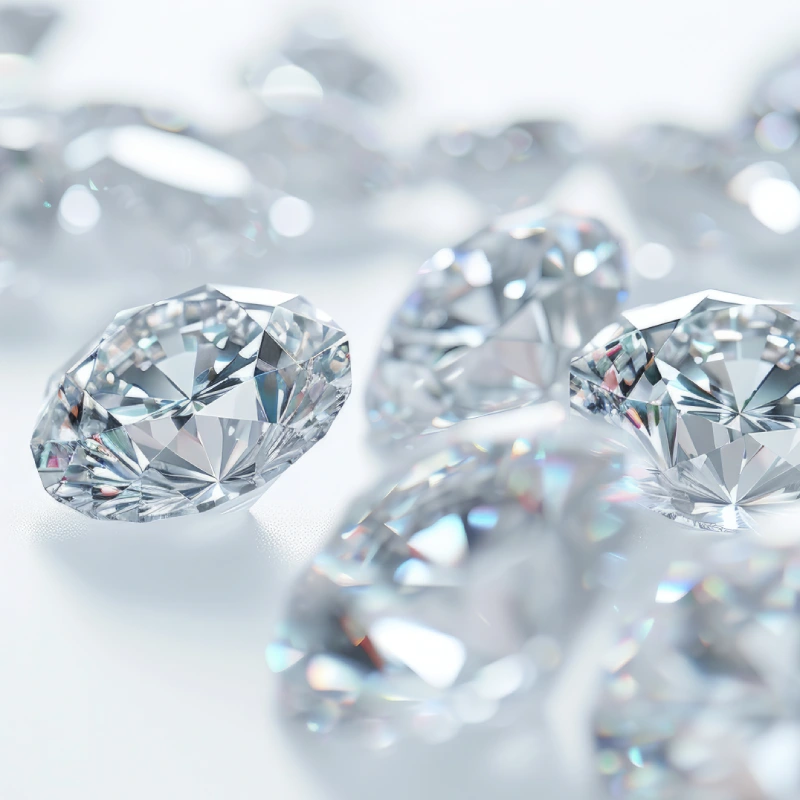

In the world of fine jewelry, the “4Cs“—Cut, Clarity, Carat, and Color—serve as the universal language for evaluating diamond quality. While each factor plays a vital role in a stone’s final character, Color is often the most misunderstood by consumers and the most strategically utilized by bench jewelers and designers. For a professional, understanding color isn’t just about memorizing a scale; it is about knowing how chemical impurities, light behavior, and even the surrounding metal can transform a diamond’s visual appeal. This guide explores the nuances of the D-to-Z scale and provides professional insights into selecting the right grade for any project.
Understanding the GIA color grading system
The industry standard for grading diamond color was established by the Gemological Institute of America (GIA). This scale begins with the letter D, representing a completely colorless stone, and continues down to Z, which indicates a diamond with a visible yellow or brown tint. As an expert in both natural and lab-grown diamonds, I can attest that this scale applies equally to both, though the cause of the color—usually nitrogen trace elements—is a natural phenomenon.
The scale is broken down into five primary categories:
- Colorless (D-F): These diamonds are the rarest and most valuable. They are chemically pure and show no trace of color even under high magnification.
- Near colorless (G-J): These stones appear colorless to the untrained eye when viewed face-up but may show a slight warmth when compared side-by-side with a higher grade.
- Faint (K-M): A noticeable tint begins to appear, often described as a warm or “antique” glow.
- Very light (N-R) to light (S-Z): These diamonds have a distinct yellow or brownish hue that is easily visible.
How metal choice influences perceived color
One of the most critical skills in professional jewelry production is the ability to match a diamond’s color grade with the appropriate metal setting. The reflection of the metal through the facets of the diamond can either mask or highlight its natural tint.

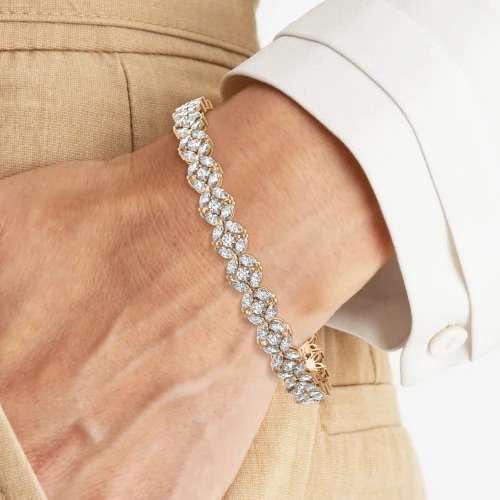
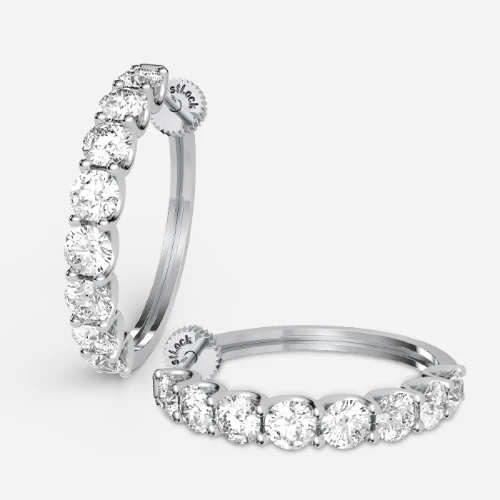
When working with “Near Colorless” stones (G-J), setting them in white gold or platinum is common to maintain a bright, icy appearance. However, if you are working with a stone in the K-M range, setting it in 18K yellow gold or rose gold can be a strategic choice. The warmth of the gold blends with the faint yellow of the diamond, making the stone appear more intentional and “whiter” by comparison. This is particularly relevant when styling matching jewelry for couples, where consistency across different pieces is essential for a cohesive look.
The interaction between color and clarity
A common question among those mastering the craft is how color affects the perception of clarity. While they are separate “Cs,” they work in tandem to define the stone’s “face-up” appearance. A diamond with a higher color grade (D-F) can sometimes make certain inclusions more visible because the “white” background provides a high-contrast canvas.
Conversely, a diamond with a lower color grade (J-L) can occasionally “hide” small, dark inclusions better than a colorless stone would. However, the primary goal should always be to find the “sweet spot” where the color doesn’t distract from the brilliance. For those looking for specific aesthetic profiles without the price tag of a D-color diamond, exploring diamond alternatives can provide different color behaviors, such as the high dispersion of moissanite or the distinct hues of white sapphires.

The role of fluorescence in color grading
Fluorescence is the glow a diamond emits when exposed to ultraviolet (UV) light. In the wholesale and manufacturing sector, fluorescence is a polarizing topic. In diamonds with lower color grades (I-M), a “Medium” to “Strong” blue fluorescence can actually be a benefit. Since blue is the complementary color to yellow, the fluorescence can make a slightly tinted diamond appear one or two grades whiter under natural sunlight. However, in higher color grades (D-F), strong fluorescence can sometimes cause a “milky” or “oily” appearance, which professionals must carefully screen for during the quality control phase.
Professional tips for choosing the right color
When preparing orders for retail jewelers or designing custom pieces in CAD, I always recommend looking at the “face-up” color rather than just the certificate. Here are three professional rules of thumb:
- Prioritize cut over color: A “Very Good” or “Excellent” cut will return more light, which can effectively “wash out” some of the color in a Near Colorless stone.
- Consider the carat weight: Larger diamonds (over 1.50 carats) show color more easily because they have more body mass to trap light. You may need to go one grade higher in color as the carat weight increases to maintain the same look.
- Laboratory vs. Natural: Ensure your grading is consistent. While the scales are the same, lab-grown diamonds often reach the D-F range more frequently, making “Colorless” more accessible for modern engagement rings.